The Global Pledge Peace Classroom
Help students practice something humanity urgently needs: living and working together peacefully — even when we are different and even when we disagree.
The Global Pledge Peace Moment
Show students the Earth. Ask what all people share. Read the Global Pledge. Then ask one question:
“I pledge allegiance to the Planet Earth, to make it a better, healthier and safer world for all.”
What is one thing people could do differently if we truly lived this pledge?
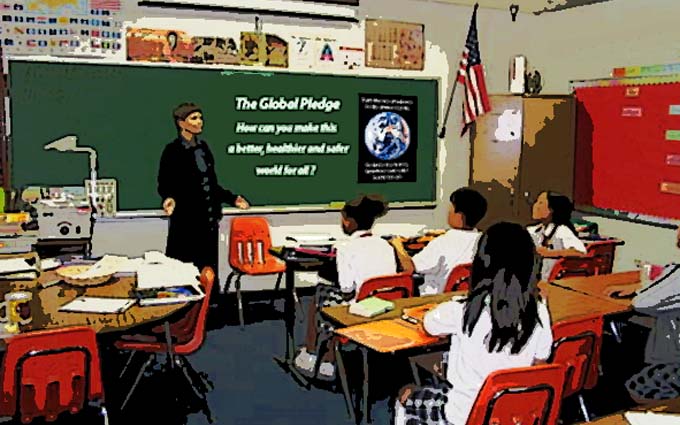
Global Pledge Peace Classroom Toolkit
Use one page or use them together. The materials are free to print and designed so teachers can adapt the discussion to age, subject, culture, and classroom needs.
Peace Is Something We Practice
See our shared humanity
We can belong to different nations, cultures, religions, families, and viewpoints while still recognizing one another as members of the same human family.
Disagree without becoming enemies
Conflict is part of human life. Students can practice listening, asking questions, lowering the temperature, repairing harm, and finding common ground.
Cooperate across differences
The world’s hardest problems require people who do not agree about everything to work together anyway.
Turn ideals into action
Peace grows through daily choices: inclusion, service, empathy, courage, fairness, and care for the shared world we all depend on.
Discussion Prompts for Different Classrooms
Early Elementary
What helps people feel safe? What does a peacemaker do? How can we help someone feel included?
Upper Elementary
How can two people disagree and still respect each other? Why does teamwork sometimes fail — and how can we repair it?
Middle School
Why do people sometimes divide the world into “us” and “them”? What helps us see a person instead of a label?
High School & Beyond
What responsibilities do we have to our country, our community, and humanity? How can societies reduce conflict without pretending real differences do not exist?
From One Classroom to the World
The long-term goal is not simply to recite a pledge. It is to help young people experience cooperation. A class can complete a peace challenge, involve families, recognize a Global Knight, or share a constructive project through Global Connections.
A future phase can connect classrooms in different communities and countries around shared projects and respectful conversation.
Common Questions
Does the Global Pledge replace the pledge we already say?
No. It is supplemental. A classroom can continue any national or school pledge and use the Global Pledge at another moment.
Is this a political program?
No. The classroom materials do not ask students to support a party, government, ideology, or policy. They invite students to think about shared humanity, peaceful problem-solving, cooperation, and constructive action.
Do students have to say the pledge aloud?
No. Teachers can invite students to read it together, read it silently, use it as a discussion text, or simply explore the questions it raises.
Is the Global Pledge only about the environment?
No. Caring for Earth matters because it is our shared home, but the larger mission is helping people build a better, healthier, safer and more peaceful world together.
Can teachers adapt the activities?
Yes. Please adapt the discussion, timing, and activities to your students and community while keeping the wording of the Global Pledge itself intact.
Students Were Part of This From the Start
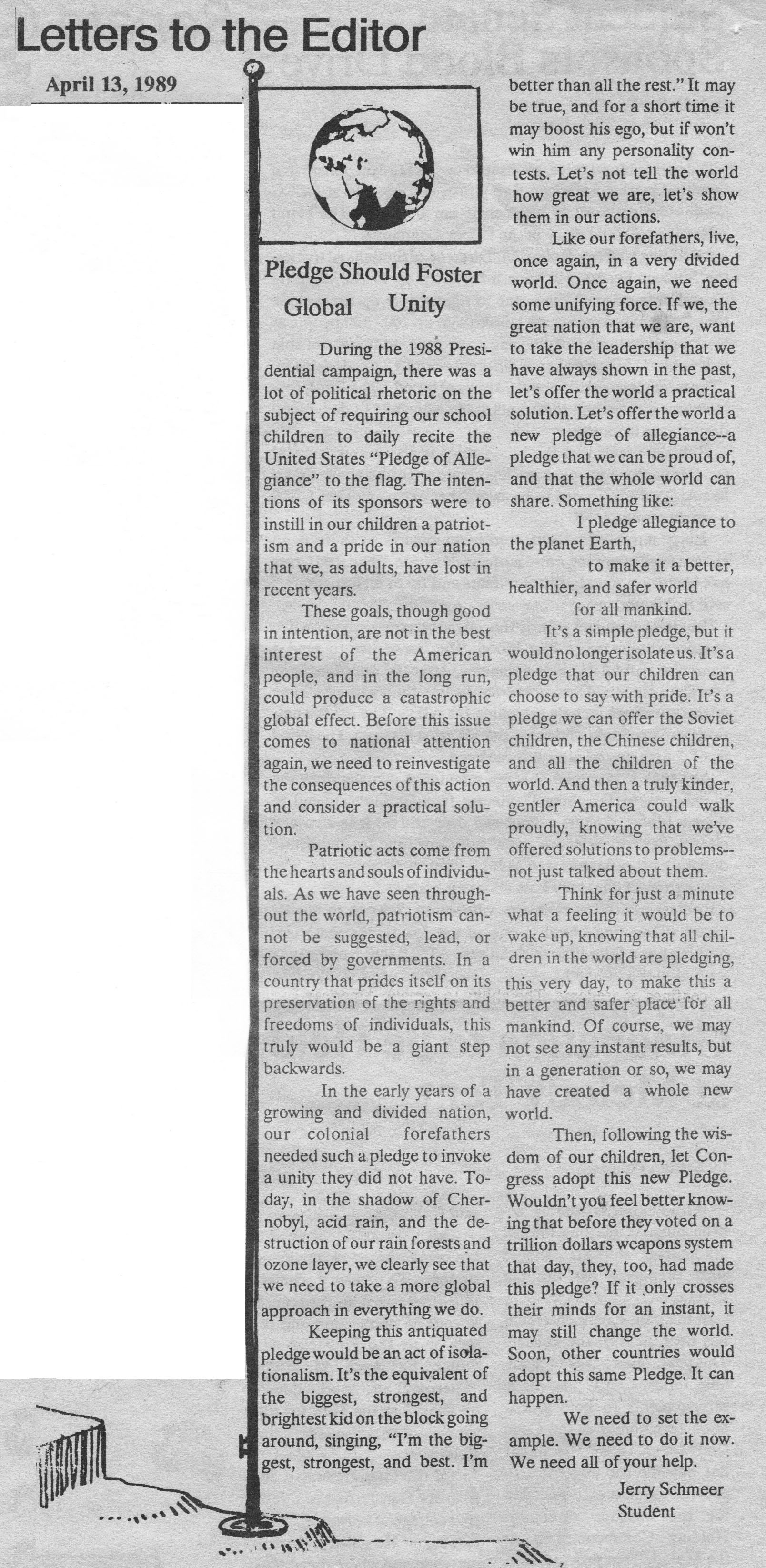
The Global Pledge began with a college newspaper editorial in the late 1980s. Student letters and encouragement helped transform one idea into a much larger effort.
The Original Editorial
Student Letters Video
Hear how student responses helped inspire the Global Pledge to grow.